AI-Powered Threat Modeling
Threat Technique Catalog for AWS: AWS Samples - Threat Technique Catalog
Threat modeling should be integrated directly into the design phase of the Secure Software Development Lifecycle (SSDLC).
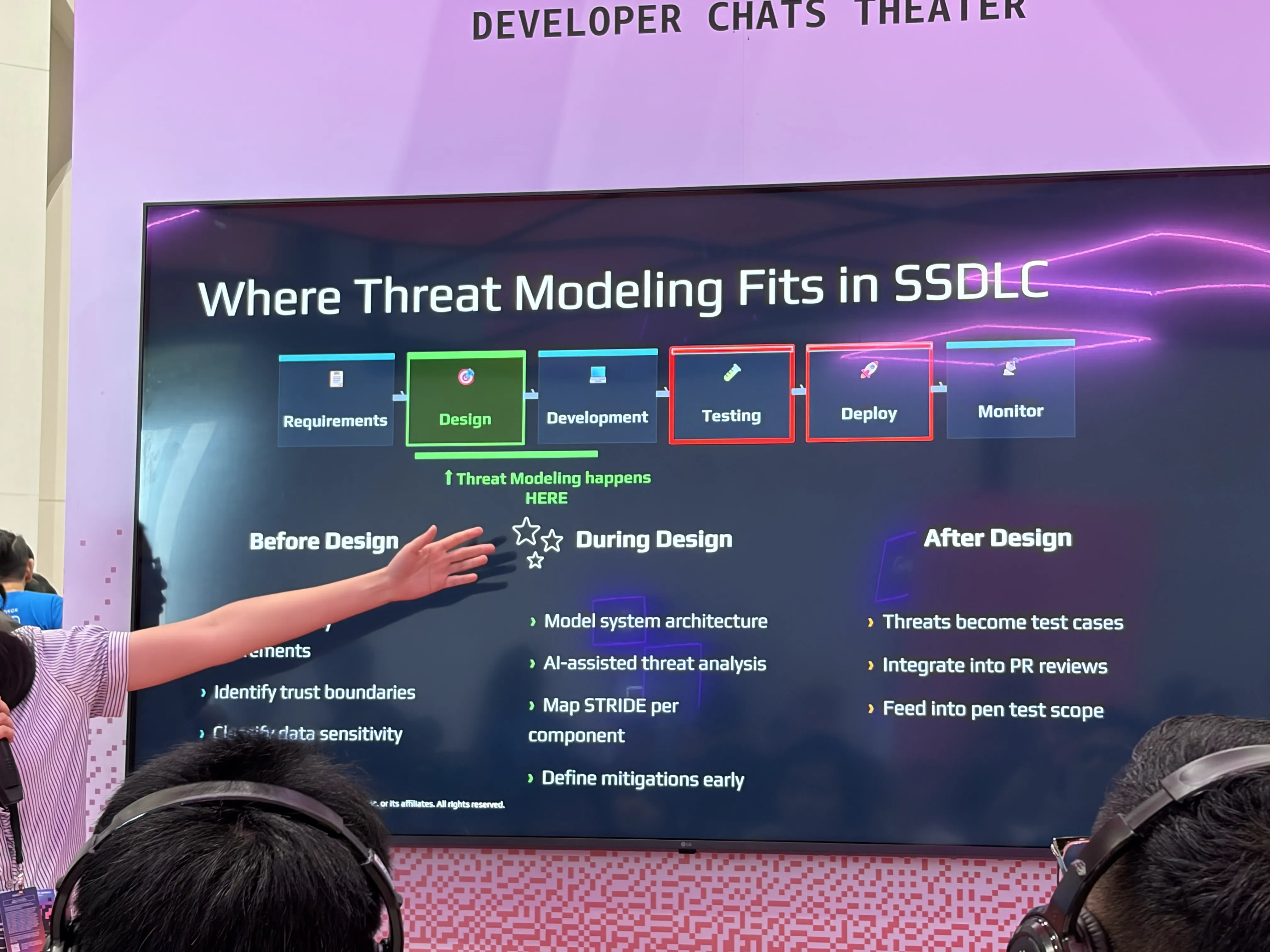
Requirements ➔ Design (Threat Modeling Happens Here) ➔ Development ➔ Testing ➔ Deploy ➔ Monitor
SSDLC Threat Modeling Timeline
1. Before Design
- Identify trust boundaries.
- Classify data sensitivity.
- Spec out security requirements.
2. During Design (Core Threat Modeling)
- Model System Architecture: Map components and interactions.
- AI-Assisted Threat Analysis: Let LLMs help discover edge-case threats.
- Map STRIDE per Component: Group threats into the STRIDE categories:
- Spoofing identity
- Tampering with data
- Repudiation
- Information disclosure
- Denial of service
- Elevation of privilege
- Define Mitigations Early: Document counter-measures before code construction begins.
3. After Design
- Threats Become Test Cases: Write automated security tests based on threats.
- Integrate into PR Reviews: Use threat models to guide pull request evaluations.
- Feed into Penetration Testing: Provide the threat catalog to penetration testers to focus their scope.
Tooling: Threat Composer AI & Kiro
- Threat Composer AI:
- Powered by Bedrock Claude 3.5 Sonnet (or Sonnet 4) with pay-as-you-go token pricing (Beware of the cost!).
- Uses 8 specialized agents working in parallel.
- Equipped with a CLI and an MCP (Model Context Protocol) server.
- Automatically parses CloudFormation templates or Terraform code to produce architecture and dataflow diagrams.
- Kiro CLI:
- If you have an existing architecture diagram, you can upload it to Kiro to perform visual threat modeling and analyze data flows.
TIP
Start Small: A quick, 15-minute threat modeling session during design is infinitely better than no threat model at all. Don’t let perfection be the enemy of security.